Rush Hour Is the Opening Act: The Strange Magic of Japan's Station Performances
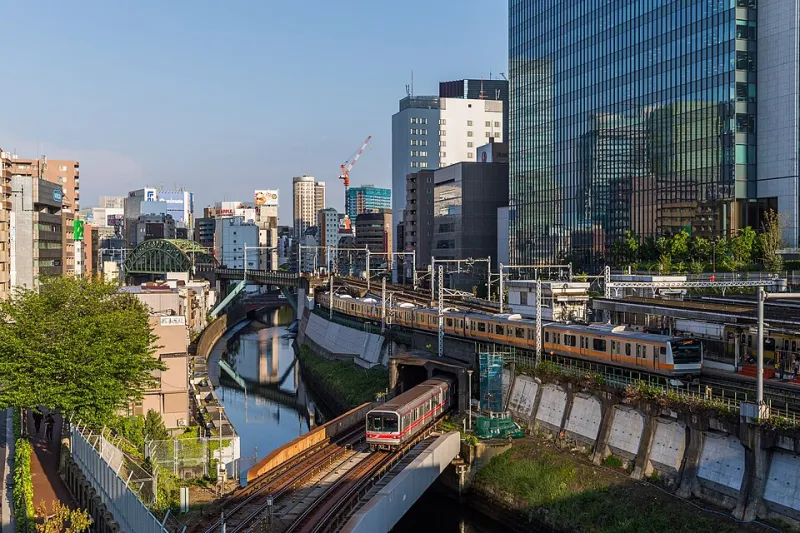
Photo: Kabelleger / David Gubler, CC BY-SA 4.0, via Wikimedia Commons
There's a clip that keeps making the rounds on American TikTok: a lone singer with an acoustic guitar, planted in the middle of a Tokyo train station, while a river of commuters flows around him like water around a stone. The comments are all some version of the same thing — why does this only happen in Japan?
The answer is more interesting than you'd think. Because it doesn't just happen in Japan. It's engineered to happen in Japan.
The Platform Is the Venue
Start with the architecture. Major Japanese stations aren't buildings so much as vertical cities. Shibuya moves an estimated two to three million people a day. Shinjuku, even more. These stations have cavernous concourses with high concrete ceilings, polished floors, and — crucially — acoustics that turn a single voice into something cathedral-sized.
Buskers figured this out decades ago. A singer in a Shibuya underpass doesn't need a PA system. The station is the reverb. That's why so many of the viral clips sound weirdly professional — the room is doing half the work. Compare that to an American busker shouting over traffic on a sidewalk built for foot traffic at a trickle, not a flood.
The Permit Economy
Here's the part most Americans don't know: a lot of that street performance is legal, licensed, and weirdly competitive.
Tokyo and other major cities run official busking permit systems. Shibuya Ward, for example, has operated structured audition-based programs where performers apply, audition, and — if they make the cut — get designated slots and spots. It's less "guy with a hat" and more "open call with a waiting list."
The result is a quality floor. When performers have to audition for the right to play a station corner, the guy doing a mediocre Radiohead cover doesn't survive. What survives is polish. And what gets filmed by a thousand daily passersby is the top one percent.
There's a whole pipeline, too. Japanese pop culture has a long tradition of performers getting scouted from street spots — some of the country's biggest acts built followings on pavement before they ever saw a label. The station corner is a tryout with an audience of tens of thousands of daily judges.
A Captive Audience, Whether They Like It or Not
Now the American counterpoint, and it's not subtle: you can't have a station concert scene without stations.
Most US metros outside of New York, Chicago, and a handful of others are built around cars. Your commute is a solo experience in a soundproofed box listening to a personalized algorithm. Nobody performs for strangers because strangers don't congregate — they pass each other at 65 miles per hour.
Japan's rail culture does the opposite. It forces millions of people into shared space, twice a day, every day, in rooms built like concert halls. A performer in that environment isn't interrupting anyone's day — they're in the day. Even the commuters who don't stop are hearing the full set. It's passive reach no Spotify playlist can buy.
That's why the clips hit so hard for American viewers. It's not just the music. It's the sight of a public square functioning — strangers sharing a moment in a place designed for exactly that.
From Rush Hour to Record Deal
The system has produced real careers. Performers who started with a permit and a corner have graduated to festival slots, label deals, and national TV appearances. The station scene works as a proving ground in a way American open-mic culture — scattered, inconsistent, hidden in bar back rooms — never quite has.
And US audiences have noticed. Compilation channels dedicated to Japanese street performances pull millions of views from American IPs. Comment sections full of people saying the same thing: our cities used to feel like this.
Maybe that's the real story. The station concert isn't just a Japanese quirk — it's a glimpse of what American public space could sound like if it were built for people instead of parking. Until then, the commute concert stays a Tokyo import, one viral clip at a time.
Next time one shows up on your feed, do the performer a favor: they've earned that view. They auditioned for it.