No Stage, No Strangers, No Shame: Inside America's Private Karaoke Obsession

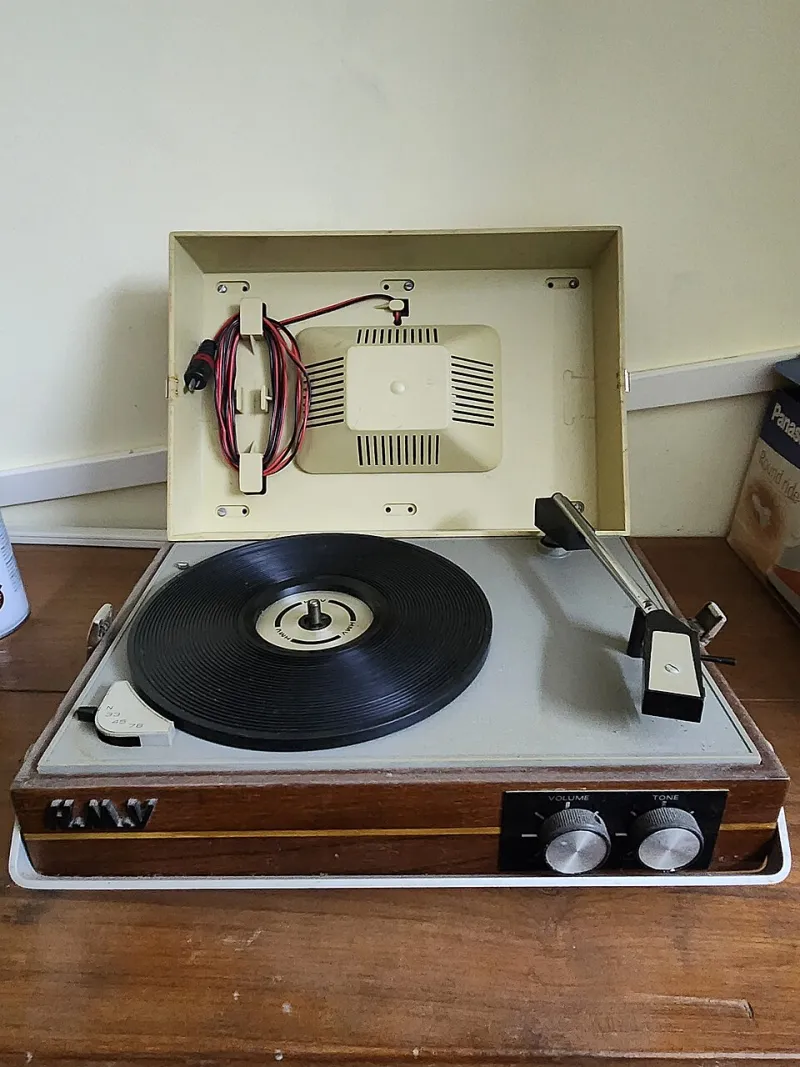
Photo: Derek Gavey from Medicine Hat, Canada, CC BY 2.0, via Wikimedia Commons
There's a specific moment that happens in every private karaoke room in America. It's around the third song, when the group's designated shy person — the one who said 'I'll just watch' on the walk over — grabs the mic, queues up something devastating like Whitney Houston's 'I Wanna Dance with Somebody,' and absolutely detonates it.
Nobody films it. Nobody judges it. The door stays shut. And that, more than any app or algorithm, is why the Japanese karaoke box has become the social institution American nightlife didn't know it was missing.
The Box That Conquered the Bar
Karaoke in the Western imagination used to mean one thing: a sticky-floored pub, a wired microphone, a stranger butchering 'Sweet Caroline' while you pretended to look at your phone. Public karaoke, karaoke's original American form, is essentially a performance with hostages.
Japan looked at that format decades ago and said: what if we removed the audience? The karaoke box — a small private room rented by the hour, stocked with a touchscreen catalog, maracas, and increasingly, table service — was invented in Okayama in the 1970s and became a national institution by the 80s. Salarymen blew off steam in them. Teenagers celebrated birthdays in them. The room was a pressure valve for an entire country.
That model has now landed, hard, in the US. Walk through Koreatown in LA, Flushing in Queens, or Seattle's International District on a Friday night and you'll pass lines of twenty-somethings waiting for rooms that book out days in advance. Chains and independents alike report weekend slots selling out before sunset. Post-pandemic, the math makes sense: a private room is a party where you control every variable. No randoms, no loud bar conversation, no watching your drink.
Group Therapy with a Tambourine
Psychologists have been saying for years that synchronized group activity — singing, chanting, even just bobbing to the same beat — releases endorphins and builds bonding faster than conversation does. Karaoke boxes weaponize this.
But the real innovation is the privacy. In a public bar, singing is a risk assessment. In a box, it's a group decision. There's no stage, which means no spotlight, which means no stakes. The worst that happens is your friend plays a sound-effect button that turns your ballad into a comedy set. That's not humiliation; that's the bit.
It's also, not incidentally, cheaper than drinking at a bar all night. Split a room four ways and you're paying less per hour than two cocktails downtown, with snacks included. Gen Z, famously more sober-curious than any generation before it, figured out quickly that a karaoke box delivers the 'night out' feeling without requiring the alcohol part.
The songbooks tell the story too. Yes, people still scream 'Bohemian Rhapsody.' But the catalogs now lean hard into J-pop, K-pop, and — thanks to a certain 1983 Mariya Takeuchi track that refuses to die — city pop. There is something uniquely 2020s about a group of American friends in a locked room at 2 AM screaming the chorus of 'Plastic Love' like it's their high school anthem.
The Owners Riding the Wave
Talk to the people running these spots and a pattern emerges: most of them didn't set out to open a karaoke box. They set out to open the kind of place they wished existed.
In LA, operators describe weekends where every room turns over two or three times, birthday groups stacking up in the lobby like airport departures. NYC owners in Flushing and the East Village talk about the 'second wave' — customers who came for a K-pop night and came back to book their own rooms. In Seattle, where the karaoke box tradition has deep roots in the International District going back decades, newer spots describe a customer base that's visibly younger and, per one owner, 'singing way more Japanese than they used to.'
The common thread in every interview: nobody's competing on the song catalog anymore. Everyone licenses the same platforms. What they're selling is the room itself — the soundproofing, the lighting, the tambourine that's seen things. The box is the product.
What the Room Means
There's a case to be made that the karaoke box is the rare import that improved on arrival. Japan built it for after-work decompression; America is using it for everything — birthdays, breakups, team bonding, first dates, Tuesdays. It's a third place that doesn't require buying anything by the drink, doesn't have a dress code, and can't be ruined by the wrong crowd, because there is no crowd.
The Japanese call the act of singing your heart out in a box 'nokoshu' culture at its purest — the belief that singing together is a legitimate social glue, not a party trick. America, it turns out, was ready for that message. It just needed a locked door, a touchscreen, and someone brave enough to go first.
Now if you'll excuse us, someone just queued 'Plastic Love' and the tambourine isn't going to shake itself.