Miss Your Train on Purpose: The American Travelers Planning Whole Vacations Around a Boxed Lunch
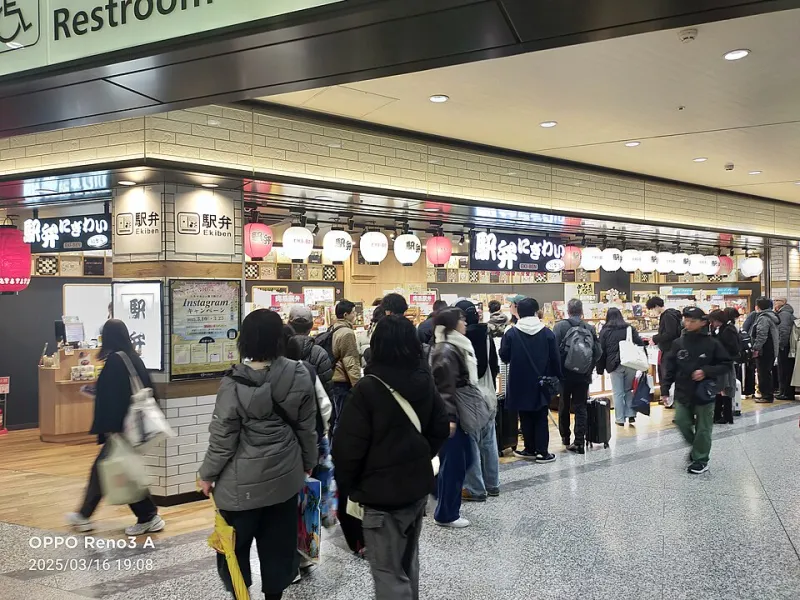
Photo: Mr.ちゅらさん, CC BY 4.0, via Wikimedia Commons
There's a video format you've probably seen on your feed by now. A traveler — usually American, usually vibrating with excitement — walks through a Japanese train station, points their camera at a wall of boxed lunches, and whispers something like "this is the whole reason I came." Then they miss their train. On purpose. Because they couldn't pick between the Hokkaido salmon and the Nagoya chicken wings.
That's not a food video. That's a pilgrimage.
What Even Is an Ekiben?
Quick primer for the uninitiated: ekiben (eki = station, bento = boxed meal) are the bento boxes sold at train stations across Japan, traditionally meant to be eaten on board. Sounds simple. It is not simple.
These things are regional identity in physical form. The packaging alone ranges from lacquered boxes shaped like the local castle to replicas of the train itself. The contents are hyper-local — whatever the region does best, packed tight and designed to survive a four-hour ride. Shizuoka gives you eel. Niigata gives you rice so good it's basically showing off. Hiroshima gives you anago and a little bit of spiritual clarity.
There are literally hundreds of varieties sold daily across the country. There are ekiben rankings. There are annual awards. There are people — Japanese and now, increasingly, American — who keep spreadsheets.
How America Got Hooked
The pipeline was inevitable. You take the US food YouTube ecosystem — a machine that can turn a gas station hot dog into a 20-minute video — and introduce it to a product that's already beautiful, already storied, and already has built-in regional drama. It's content catnip.
Add the post-pandemic travel surge and the general American hunger for experiences that feel authentic (a word we use about Japan roughly 40,000 times a day), and you get the current moment: travelers building entire itineraries around ekiben runs. Buying a shinkansen ticket not to get somewhere, but to eat a specific box on a specific line. Filming the moment they open the lid like it's a Rolex unboxing.
The Amtrak angle is the funniest part. American rail content creators — a scrappy, passionate, chronically delayed bunch — have started holding their Amtrak café car sad sandwiches up against the ekiben standard. The comparison is brutal. The comparison is also fair. One of these experiences involves warm rice, seasonal sides, and a sense that someone cared about you. The other involves a $12 wrap and a microwave ding.
The Regional Beef Is Real
What elevates ekiben from "cute lunch" to "obsession" is the rivalry. Every region believes its ekiben is superior, and every region has receipts.
Tokyo Station alone sells hundreds of varieties from across the country, which means you can conduct a full regional tournament without leaving the platform. Hokkaido loyalists will fight you about crab. People from Gunma will quietly hand you a kamameshi pot and refuse to explain why it's superior. (It is, but they won't say it. They'll just watch you eat it.)
Americans, raised on the idea that train food is a punishment, find this level of regional pride over a boxed lunch genuinely moving. Some of us find it threatening. Either way, we keep buying tickets.
The Part Where We Admit Something
Here's the uncomfortable truth underneath the trend: the American obsession with ekiben isn't really about food. It's about what the food represents.
Ekiben work because Japan built a system where they could — reliable trains, on-time departures, a culture that treats a meal eaten at 200 kilometers per hour as worth doing well. The ekiben is a small, delicious artifact of a society that decided transit is not downtime to be endured but time to be enjoyed. Americans don't just want the box. They want the world that makes the box make sense.
That's why you can't just import it. Someone tried selling "ekiben-style" lunches at a US transit hub and the result was a sad plastic tray next to a vending machine. The box is the easy part. The infrastructure, the pride, the whole cultural operating system behind the box — that's the hard part.
So yes, book the trip. Miss the train on purpose. Eat the Hokkaido salmon while watching Mt. Fuji blur past. Just know that when you get home and bite into your airport sandwich, the sadness you feel isn't about the sandwich.
It's about everything else.