Thirty Dollars for Pudding: Inside America's Strange New Obsession With Tokyo's Basement Groceries
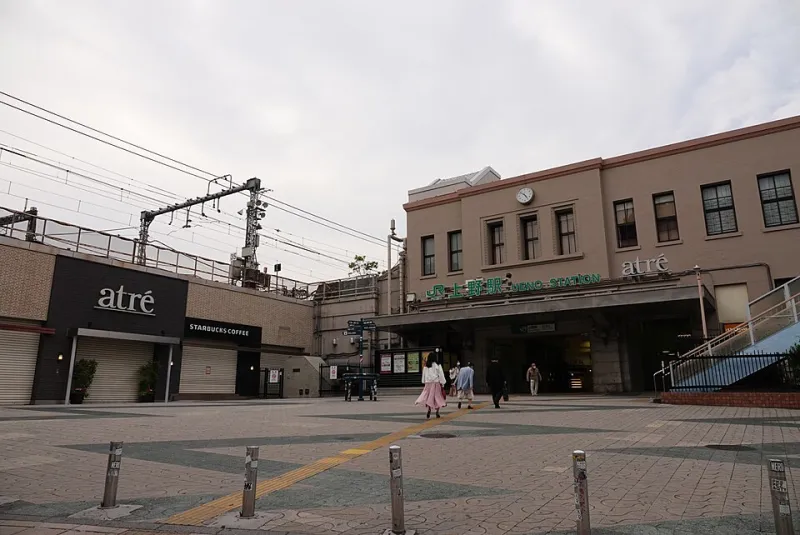
Photo: HQA02330, CC BY-SA 4.0, via Wikimedia Commons
There's a moment that happens in the basement of every major Tokyo department store, usually around 10:15 a.m., about fifteen minutes before the doors officially open. A small crowd of tourists — suitcases still rolling, coffee still in hand — is pressed against the temporary barriers near the escalators. They're not waiting for a concert. They're not camping for a sneaker drop. They're waiting for groceries.
Welcome to the depachika, the underworld of Japanese department stores, and quite possibly the most under-the-radar food attraction America has fallen for since the konbini egg sandwich went viral.
What Exactly Is Down There
For the uninitiated: depachika — a mashup of "depato" (department store) and "chika" (basement) — is the food hall occupying the ground-or-below level of basically every serious Japanese department store. Isetan in Shinjuku. Mitsukoshi in Ginza. Takashimaya anywhere. And these are not food courts in any sense an American would recognize.
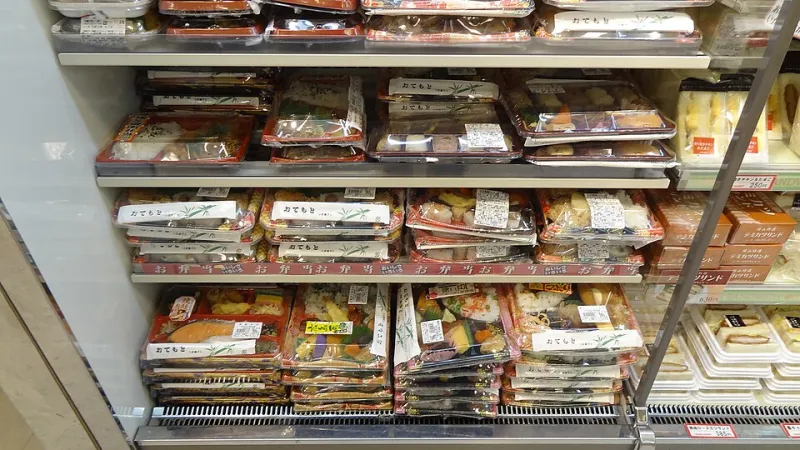
Picture a space the size of a Whole Foods, but arranged with the visual discipline of a jewelry counter. Bento boxes in rows so precise they look machine-placed, except every one was assembled by hand that morning. Tempura behind glass, fried in small batches throughout the day so nothing sits. Wagashi confections shaped like seasonal flowers. And yes — the famous puddings, some of which run thirty bucks a pop, sold in glass jars that weigh more than your phone.
The presentation is the product. A depachika isn't really selling you lunch. It's selling you the feeling that lunch can be flawless.
The Pilgrimage Is Real
Scroll through any travel subreddit or TikTok tag for Tokyo food and you'll find the pattern: itineraries built backwards from a basement. "Day 2: Isetan depachika at opening, then whatever." Entire YouTube videos with millions of views are just walking tours of Mitsukoshi's food floor, no talking, no music, just the camera drifting past trays of sesame-crusted salmon and mountains of strawberry shortcake slices.
Part of this is the free-sample culture. American grocery sampling died somewhere around the pandemic, but depachika counters still casually hand out cut fruit, crackers, and cubes of cheesecake like it's nothing. For a US traveler raised on Costco Saturday samples as the pinnacle of the form, this feels like discovering a lost civilization.
Part of it is the clock. Depachika food is made for that day, and around 7 or 8 p.m., prices start dropping in discounts that would make a clearance-aisle American weep. Travelers have learned the schedule the way they learned the Suica tap. There are blogs dedicated entirely to timing your basement run.
America Tries to Copy It, Sort Of
Naturally, the US food industry has noticed. The new generation of upscale food halls — the ones replacing dead malls from coast to coast — have started borrowing depachika vocabulary. Vendors are told to "stage" their cases. Prepared-food sections at fancy grocers now arrange their bento with deliberate negative space. One East Coast chain famously imported a Japanese food-styling consultant to teach staff the art of the 45-degree angle.
The results are... fine. And that's the problem. The copy stops at the surface.
What the imitations miss is that depachika perfection isn't a styling choice — it's an entire system underneath. Supplier relationships that go back decades. Staff trained for years on presentation standards most customers will never consciously notice. A cultural acceptance that food is disposable art, made to be replaced, never warehoused. American food retail runs on opposite logic: maximize shelf life, minimize labor, move volume. You can't style your way out of that with a nicer tray.
The other half of the gap is trust. In Japan, the immaculate display is a promise — what you see is exactly what you get, made today. In the US, we've been trained to assume the display is marketing, and the fine print is where the truth lives. Shoppers photograph the gorgeous case and then buy the packaged version anyway.
Why It Still Matters
Here's the thing, though: even at half-translation, the depachika wave is doing something good for American food culture. It's raising the bar on what grab-and-go can look like. It's teaching a generation raised on drive-thru that presentation isn't pretension — it's respect for the person eating.
And honestly, the basement itself remains worth the pilgrimage. Not because your thirty-dollar pudding will change your life, but because for one hour, in a fluorescent-lit underground in Shinjuku, you get to experience food retail as theater, as craft, as something someone cared about at 5 a.m. that morning.
You can't import that. But you can fly home with a suitcase that smells faintly of soy-marinated eggs and understand, a little, why everyone else booked the 10 a.m. flight too.