Ink in the Water: Why Every American Bathhouse Opening in 2025 Has to Answer for Japan's Tattoo Ban First
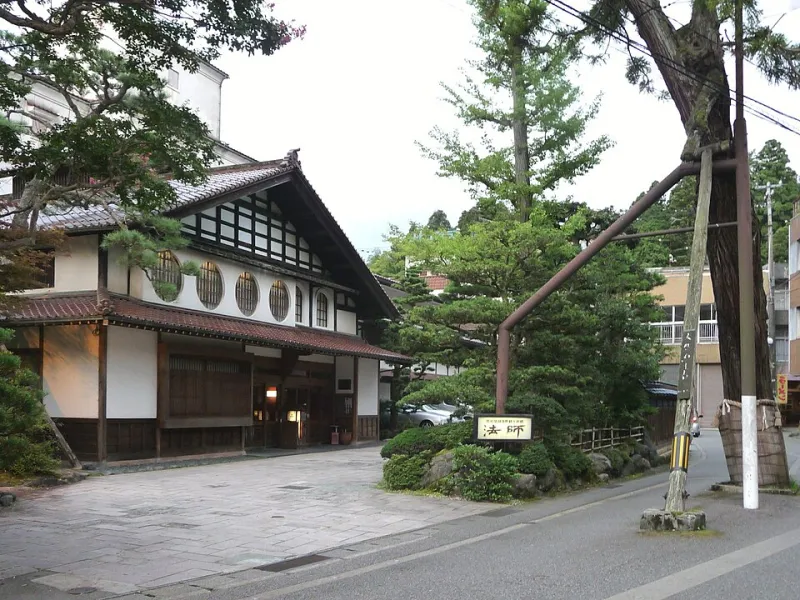
Photo: Namazu-tron, CC BY-SA 3.0, via Wikimedia Commons
Here's a fun party trick: walk into any new Japanese-style bathhouse opening in Brooklyn or downtown LA and ask the front desk, casually, "hey, I have a sleeve — am I good?" Watch the staff member's face do a tiny calculation. Because whether they know it or not, they just inherited a 400-year-old argument.
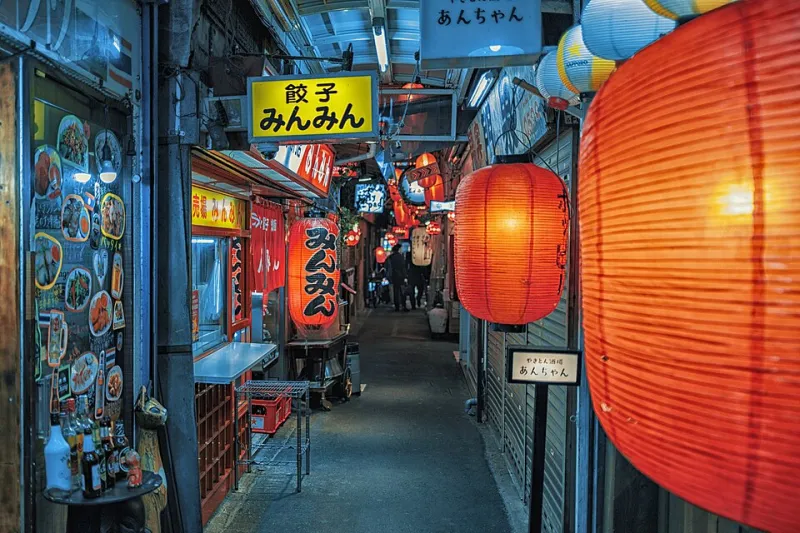
Public bathing is booming in America. Jjimjilbangs in Koreatown, sento-inspired soaking clubs in Portland, a whole wellness-industrial complex built around cold plunges and cedar tubs. And every single one of them, at some point, has to deal with the question Japan has been kicking around since the Edo period: what do we do about people with tattoos?
Where the Ban Actually Comes From
The standard story Americans get is "tattoos are associated with the yakuza," full stop. That's true, but it's also the lazy version. The association hardened in the postwar era when organized crime groups became the most visible inked population in Japan, and bathhouse owners — who ran small businesses serving their whole neighborhood — didn't want to scare off paying customers. So: no tattoos. Simple, blunt, enforced with a laminated sign at the door.
The irony is that irezumi, the full-body traditional Japanese tattoo, is one of the most celebrated art forms the country ever exported. Japan taught the world to love its tattoos and then told its own tattooed citizens to stay out of the pool.
The Cover-Up Sticker Era
Ask any tattooed Japanese-American traveler about onsen trips and you'll get stories. There's the guy from Torrance who spent a Kyushu trip doing the "private bath roulette" — booking family baths (kashikiri) one at a time because the big communal rotenburo was off-limits. There's the woman whose mom bought her a pack of flesh-colored seal patches the size of playing cards, meant to hide small tattoos like a Band-Aid with a cover story.
"The stickers are the worst part," she told me. "Not the ban. The ban you understand — it's a rule. The stickers are a performance. Like your body is a mistake the hotel is helping you clean up."
And yet: things are moving. The 2020s tourism crunch forced the issue. Ryokans losing money couldn't afford to turn away inked foreign guests, and a growing number of onsen towns — especially in places like Beppu and Kusatsu — quietly relaxed policies or went tattoo-friendly outright. Some now advertise it. There are even dedicated tattoo-friendly onsen maps, maintained by fans, updated like restaurant guides.
What American Bathhouses Are Doing About It
Here's the thing — the new wave of US bathhouses mostly just... didn't ban tattoos. Which is nice! But it also means they skipped the hard part of the conversation Japan has been having for decades: what actually makes communal bathing work?
The answer, per basically everyone who's soaked in both countries, isn't the rules. It's the etiquette infrastructure. Wash before you enter. No swimsuits in the bath (yes, really — the water stays cleaner). Quiet. Small towels on your head, not in the water. These norms are what let strangers share a 104-degree pool without it becoming a logistics problem.
American bathhouses tend to import the aesthetic — the wood, the lanterns, the matcha — and skip the social contract. Then they wonder why the vibe is "spa day" instead of "neighborhood institution."
The Negotiation Is the Point
There's a temptation to frame Japan's tattoo situation as pure backwardness and America's open-door policies as progress. But talk to the inked travelers who keep going back, and the picture is messier and more interesting. Some of them like the private bath workaround — it's cheaper than a hotel spa, and you get the whole tub. Some appreciate that the rules are finally visibly shifting, that they can walk into a Beppu bathhouse in 2025 with a full arm and nobody blinks.
The lesson for the US isn't "copy the ban" or "copy the lifting of the ban." It's that bathing culture is a living negotiation between tradition and the people showing up. Japan is doing that negotiation in public, slowly, with laminated signs and seal stickers and exceptions carved out one ryokan at a time. It's awkward. It's also honest.
American bathhouse owners would do well to steal that energy: write down your rules, explain where they came from, and be willing to change them when the people in the water say otherwise. Because the water's warm, the ink is everywhere, and nobody — in any country — actually wants to bathe alone.